
Tour along the Oise River, between Compiègne and Chantilly
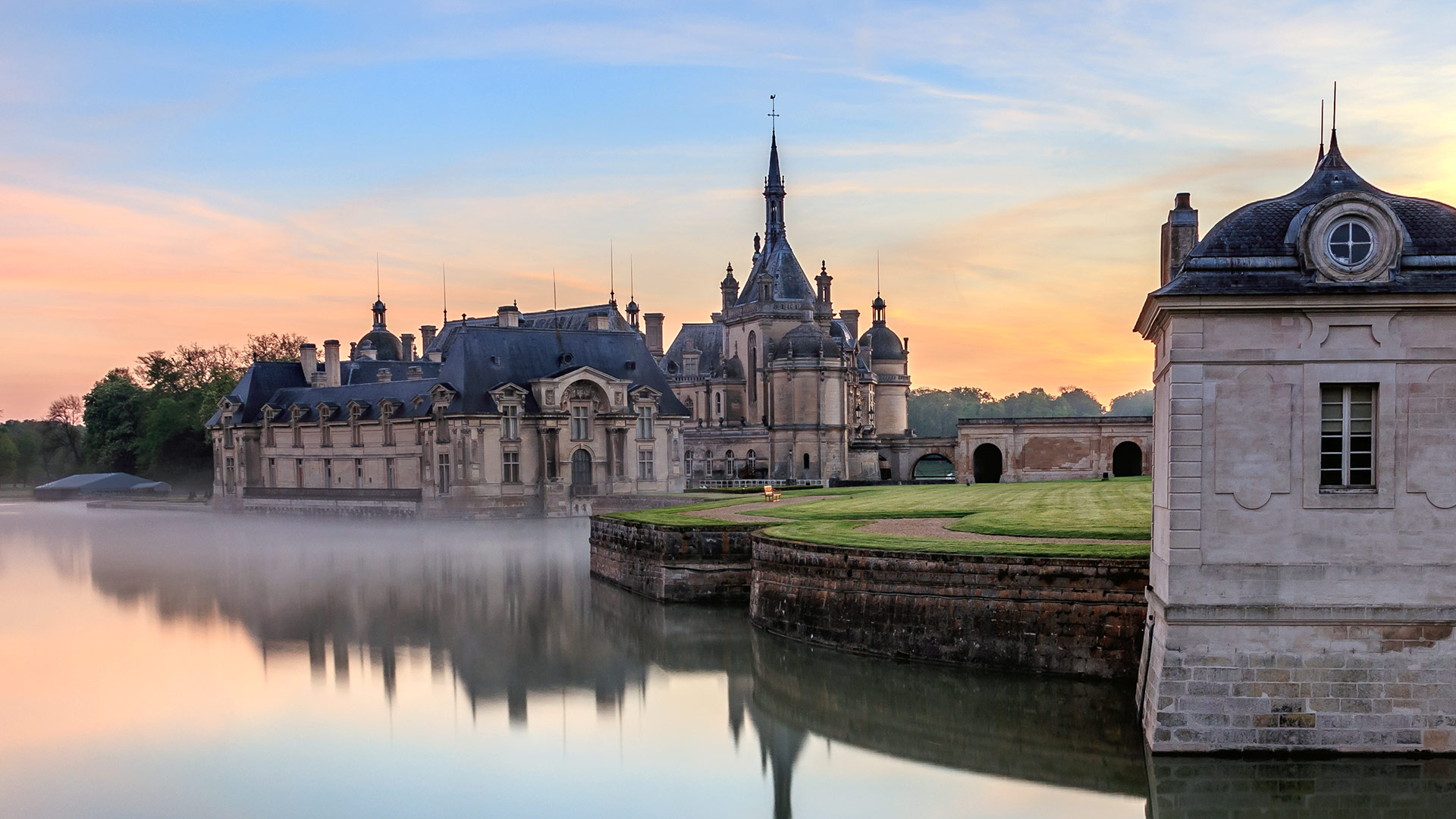
©Michel Hincker/iStock
From royal châteaux to Cistercian abbeys, this itinerary takes you through three centuries of French history at the heart of one of the largest wooded areas in northern France. In six stops, you cover princely residences, national forests, and medieval cities, along a route that celebrates the cultural riches of the Oise region.
Stop 1 – Compiègne: an imperial residence on the banks of the Oise
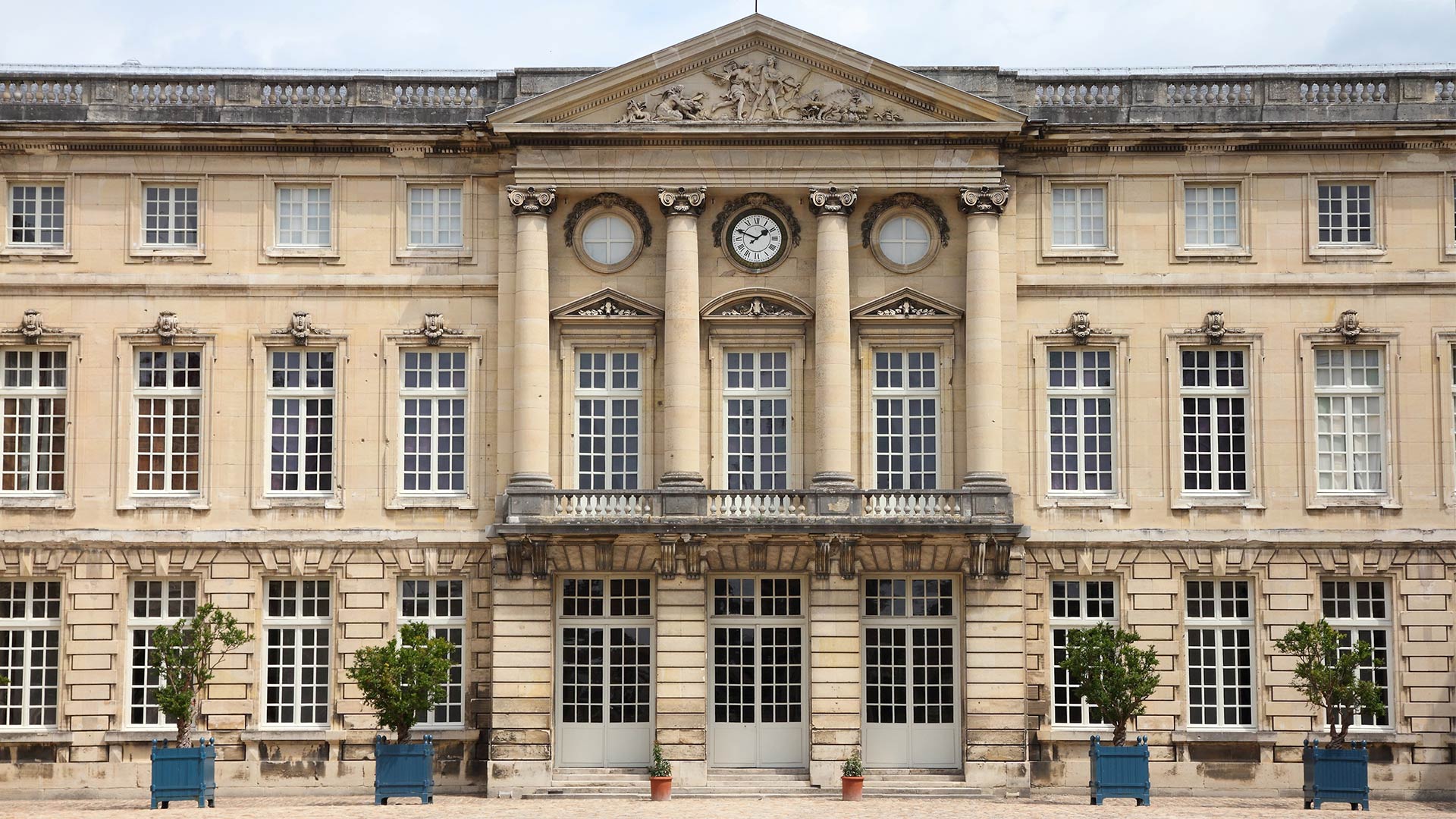
Your journey begins in Compiègne, where the former residence of French sovereigns since the Carolingian era is to be found, a stone’s throw from the banks of the River Oise. Built under Louis XV and then extended in the 19th century, the château presents its imposing neoclassical facade opposite Place d’Armes. Cross the threshold and explore the historic apartments: more than 40 rooms decorated with 18th-century wood paneling, French Empire furniture designed by Jacob-Desmalter, and sumptuous tapestries plunge you into the world of the royal courts.
You then come to the Second Empire museum, which occupies several rooms on the second floor. You discover portraits of officials and sculptures, including Empress Eugénie Surrounded by her Ladies in Waiting by Franz Xaver Winterhalter (1855), a huge canvas that reproduces the hushed atmosphere of imperial receptions. On the first floor, the National Car Museum displays emblazoned carriages, English mail coaches, and the first automobiles, over a period ranging from the 17th century to the early 20th century. The lacquered bodywork, iron-rimmed wheels, and upholstered interiors bear witness to the changes in aristocratic modes of transport. After this royal day, head to Rhizome, where seasonal produce, short food supply chains, and organic wines are given pride of place in beautiful market cuisine.
Despite what its name might suggest, the Paris-Roubaix cycle race leaves from Compiègne every April. You can watch the start from Place du Château, surrounded by supporters who have come to cheer on their favorites.
Before reaching the forest, take a detour via the Rethondes Clearing to the north-east of the town. You will discover the replica of Marshal Foch’s dining carriage, where the armistice was signed on November 11, 1918. The memorial also recounts the armistice of 1940, imposed by Hitler on the same spot.
©tupungato/Getty Images Plus
Stops 2 and 3 – From the Forest of Compiègne to Pierrefonds Castle
Leave the town heading east and enter the Forest of Compiègne, a remnant of the immense Forest of Cuise. Spanning 14,500 hectares, this area unfolds between the Oise and Aisne Valleys in a vast network of trails, cycle paths, and passable tracks that criss-crosses the high forests of oak and beech. By car, the D973 and D332 allow you to reach Pierrefonds, with a few stops along the way for short hikes in the undergrowth. By bicycle, hop into the saddle at Carrefour Royal and choose one of the two cycle paths that run through the forest from west to east. Route no. 1 takes you to Pierrefonds in 11.3 kilometers via Vieux-Moulin, a hamlet with low houses. Route no. 2 (14.5 km) passes through Saint-Jean-aux-Bois, a scattered village nestled at the heart of the massif. Ferns line the route, the shade of the branches filters the light, and you sometimes come across walkers drawn to the Beaux-Monts to the north or the Grands-Monts to the south.
Pierrefonds fortified castle appears on emerging from the forest. Built in the 14th century and then extensively restored by Viollet-le-Duc between 1857 and 1884, it was supposed to serve as an imperial residence for Napoleon III. From the outside, you immediately note the imposing quadrangular shape (103 by 88 meters) flanked by eight defensive towers: the crenelations, machicolations, and ornamental sculptures reproduce the 19th century’s romanticized image of the Middle Ages. Inside, the second floor of the keep is home to a sumptuous reception room with wood paneling and furniture designed by Viollet-le-Duc. Continue towards the Salle des Preuses, an impressive 53-meter-long vessel dominated by a huge fireplace decorated with nine statues. In the north wing, explore two permanent exhibitions devoted to the famous architect’s projects and works by the Monduit workshops: the lion weather vane on Arras belfry, the Cupid on Amiens Cathedral, and several gargoyles on Notre-Dame Cathedral in Paris.
Stop 4 – Le Moncel Royal Abbey: the Poor Clares’ retreat
Just a few kilometers from Pierrefonds, you reach Le Moncel Royal Abbey, founded in 1309 by Philip the Fair next to a castle, of which two towers remain. This Poor Clares’ abbey (Order of Saint Clare founded in 1212) enjoyed its heyday in the middle of the 14th century. Enter the courtyard surrounded by three wings covered by a recently renovated high brown-tiled roof. The gallery of the cloister, which dates from the 16th century, presents elegant arcades, while the refectory (14th century) preserves wall frescoes in faded pigments, fragile souvenirs of the monastic life of the period. You then reach the Gothic charter room, which houses remarkable stained-glass windows featuring coats of arms. In the attic, look up at the frameworks made of oak from the Forest of Halatte (14th century), which demonstrate medieval construction techniques.
Stop 5 – Medieval getaway in old Senlis
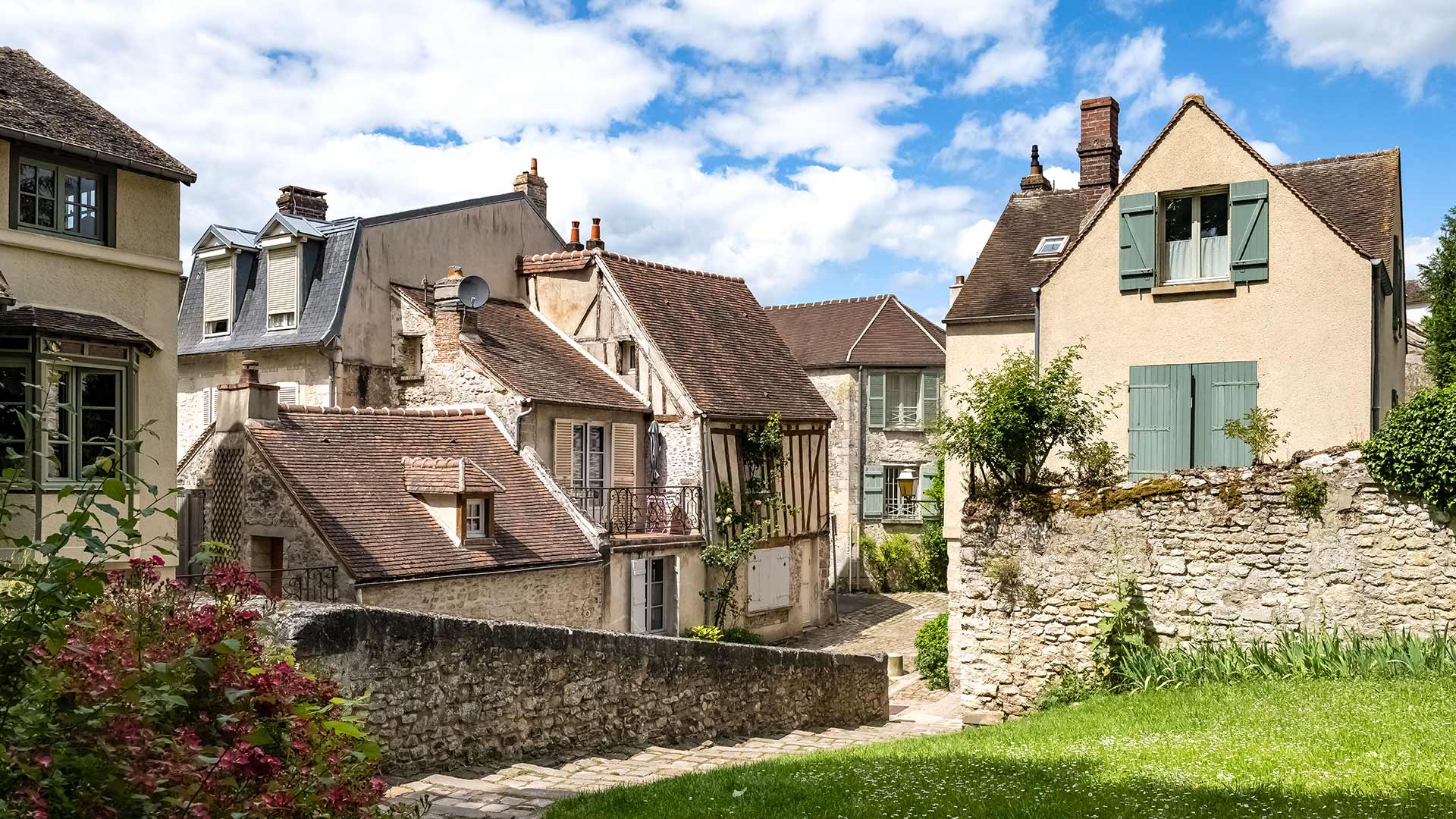
For this fifth stop, pass through the Forest of Halatte to Senlis, a former royal town encircled by a Gallo-Roman enclosure from the 3rd century. In the town center’s narrow streets, stroll among the noble residences, including the Hôtel des Trois-Pots, a half-timbered building on Rue du Châtel. Notre-Dame Cathedral, built from 1153 onward, rises above the rooftops with a 78-meter spire. Admire its west portal whose polychromy has been restored and the south facade (16th century), whose chiseled sculptures contrast with the Gothic austerity of the main entrance. Visit the nearby Museum of Art and Archeology, set up in the former episcopal palace. Its collections trace the town’s history, among Gallo-Roman remains and medieval statuary. Take a break from walking and go for lunch at Julianon, a family-run address in the center, then stop off at Maison Ringeval to pick up some Pavés de Senlis, the famous hazelnut milk chocolates coated in meringue, a crisp yet melt-in-the-mouth specialty.
©Wirestock/iStock
Stop 6 – The Domaine de Chantilly: princely collections and the Great Stables
The itinerary draws to a close in Chantilly, where the château, rebuilt in the 19th century for the Duke of Aumale, is home to the second largest collection of antique paintings in France after the Louvre. Explore the Princes’ apartments, decorated with Gobelins tapestries and First and Second Empire furniture. In the Condé Museum, admire the Gallery of Painting with 85 restored paintings, along with the Clouet Room and its Santuario, displaying Raphael’s Madonna and 40 miniatures by Jean Fouquet.
Outside, explore the grounds designed by Le Nôtre in 1662, encompassing a Grand Canal and rustic Hamlet dating from 1774. Stroll among ponds, trimmed groves, and carefully arranged perspectives, before making your way to Jean Aubert’s Great Stables. Built in the 18th century, they now house the Living Horse Museum. The stone vaults accommodate demonstrations and permanent exhibitions on equestrian history. To bring your stay to a beautiful close, book a table at Le Verbois, a restaurant boasting two Michelin stars that offers fine dining with regional accents.
850 meters from the château, unpack your bags at the Auberge du Jeu de Paume, which features an indoor swimming pool and spa. Breakfast can be enjoyed in the dining room or your bedroom, the restaurant serves carefully considered French cuisine, and you can make the most of the sauna after a day’s visits.
Saint-Leu-d’Esserent, a small medieval town along the River Oise is located nearby. Discover the priory church of Saint-Leu, a magnificent building overlooking the valley. The most important Cluniac site in the Oise region, it is testament to Romanesque and Gothic architecture in Picardy.
©Michel Hincker/iStock




Feel like getting away from it all?
See our suggestions for novel trips and must-see places to visit near your home or holiday destination.